

7 Natural Steps to Fix Uneven Skin Tone at Home
Quick Summary
Uneven skin tone is often caused by sun exposure, inflammation from breakouts, hormonal shifts, and irritation, and each cause leaves a different kind of mark. Fixing it at home means matching the approach to the mark, protecting skin with daily sunscreen, using gentle exfoliation, and keeping a consistent routine.
- Sunscreen is the single most important step, so use a broad-spectrum sunscreen every morning, even on cloudy days.
- Exfoliate two to three times a week, not every day, to avoid irritating the skin.
- Hyperpigmentation usually takes several weeks to months to fade with steady care.
- Lemon juice, apple cider vinegar, and baking soda are not recommended as home remedies.
- Get any spot that is changing in size, shape, or color checked by a dermatologist.
Table of Contents
- What Causes Uneven Skin Tone and How to Spot It
- Step 1: Build a Skincare Routine for Uneven Skin Tone
- Step 2: Protect Your Skin With Sunscreen for Hyperpigmentation
- Step 3: Use Gentle Exfoliation to Reveal Brighter Skin
- Step 4: Try Natural Remedies for Uneven Skin Tone, and Know Their Limits
- Step 5: Hydrate and Support Your Skin Barrier
- How Long Does Hyperpigmentation Take to Fade?
- Start Your Brightening Routine This Week
- Frequently Asked Questions
What Causes Uneven Skin Tone and How to Spot It
Uneven skin tone is an umbrella term, and that's the first thing to understand before you try to fix it. Dark spots, patches of redness, and a dull, patchy look can all be called "uneven tone," but they often have different causes and respond to different approaches. Treating every patch the same way is why many home routines stall.
Most cases trace back to a few common triggers: sun exposure, inflammation from breakouts, hormonal shifts, and irritation from harsh products. Each one leaves a different kind of mark. Here's how to tell them apart.
The four main types of uneven tone
- Sun spots (solar lentigines): Flat, brown, sharply defined spots on areas that get the most sun, cheeks, nose, forehead, and the backs of the hands. They build up gradually over years of exposure and tend to stay put without consistent sun protection.
- Post-inflammatory hyperpigmentation (PIH): Brown or reddish marks left behind after acne, eczema, insect bites, or any injury to the skin. They follow the shape of the original breakout and fade slowly on their own, but inflammation and sun exposure can deepen them.
- Melasma: Symmetrical, blotchy brown or gray-brown patches, usually on the cheeks, upper lip, forehead, or chin. It's often linked to hormonal shifts (pregnancy, hormonal contraception) and is notoriously stubborn. Heat, sun, and irritation can trigger flares.
- Redness and post-inflammatory erythema (PIE): Pink or red marks, often left after acne, or general flushing linked to a compromised barrier, rosacea, or irritation. Redness responds to soothing and barrier support rather than to brightening acids.
Why the distinction matters
A gentle brightening serum may help a sun spot and a fading PIH mark, but it can aggravate melasma if it irritates the skin, and it won't do much for redness caused by a damaged barrier. Likewise, aggressive exfoliation can worsen PIH and melasma because irritated skin produces more pigment as it heals. Matching the approach to the mark is the difference between steady progress and a routine that quietly backfires.
Signs it's time to see a professional
Most uneven tone is cosmetic and responds to patient home care. But some patterns deserve a dermatologist's eyes: a spot that is changing in size, shape, or color; a mole with irregular borders; pigmentation that appears suddenly or spreads quickly; areas that are painful, itchy, bleeding, or crusted; or melasma that isn't responding after months of careful care. A dermatologist can also distinguish melasma from other pigmentation and recommend prescription options when home care plateaus.
Watch out: if a "dark spot" is new, changing, or asymmetric, don't treat it as a cosmetic issue. Get it checked.
Once you know which type you're dealing with, the rest of this guide, sunscreen, gentle exfoliation, brightening ingredients, and hydration, makes more sense, because you'll know which steps to prioritize.
Step 1: Build a Skincare Routine for Uneven Skin Tone
A simple routine is the foundation of any plan to fix uneven tone. Start with fewer products and use them every day. Consistency beats a long list of steps you skip.
A treatment serum like the Niacinamide Vitamin Boost Serum - TREAT fits well in that middle step, since it's built for brightening and smoothing.

Where your routine goes next matters too. If you're unsure where a serum fits alongside other products, this guide on where niacinamide fits in your skincare routine explains the order step by step.
Step 2: Protect Your Skin With Sunscreen for Hyperpigmentation
Sun exposure is one of the biggest reasons dark spots stay put or get darker. Sunscreen is the single most important step if you want uneven tone to fade.
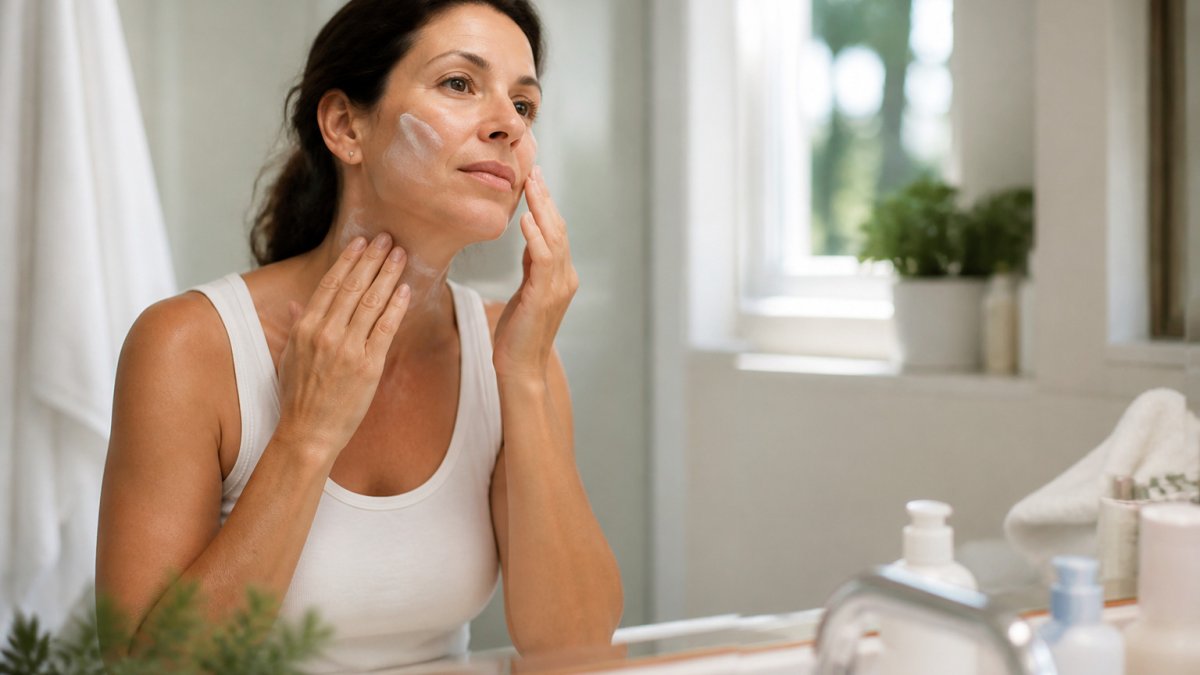
Use a broad-spectrum sunscreen every morning, even on cloudy days. Reapply if you're outside for long stretches. Skipping this step can undo the progress you make with every other part of your routine.
Step 3: Use Gentle Exfoliation to Reveal Brighter Skin
Exfoliation removes dead skin cells that dull the surface. It helps reveal fresher skin underneath, but only if you keep it gentle.
Try exfoliating two to three times a week, not every day. For more ideas on smoothing the surface naturally, these natural ways to improve skin texture cover options beyond exfoliation.
The Night Renewal Creme includes Glycolic Acid to help smooth the look of texture, so it can be part of your evening routine. Night Renewal Creme - RENEW is worth introducing slowly, as the Glycolic Acid can irritate sensitive skin at first.
Niacinamide Vitamin Boost Serum - TREAT →
Step 4: Try Natural Remedies for Uneven Skin Tone, and Know Their Limits
Natural remedies are popular for uneven tone, and some have a reasonable evidence base while others are mostly folklore. The useful skill isn't avoiding them altogether, it's knowing which ones are worth trying, how to use them safely, and when to stop.
What the evidence actually supports
- Green tea: Contains EGCG and other polyphenols with antioxidant and soothing properties. Topical green tea extracts are generally well tolerated and are often included in brightening and calming products. It's a low-risk addition, though it won't replace sunscreen or proven brightening ingredients.
- Niacinamide (vitamin B3): Not a "home remedy" in the kitchen sense, but a naturally derived ingredient with strong evidence for improving the look of uneven tone and supporting the barrier. It's gentle enough for most skin types and is a sensible first brightening step.
- Aloe vera: Soothing and hydrating, useful for calming irritation that can drive pigment. Evidence for fading existing dark spots is limited, but it's a reasonable barrier-support ingredient.
- Honey: Has mild humectant and antibacterial properties. Manuka honey in particular is studied for wound healing, but evidence for fading pigmentation is thin. It's gentle for most people but can sting on broken skin.
- Turmeric: Contains curcumin, which has antioxidant and anti-inflammatory activity in lab studies. Topical turmeric is poorly absorbed and can stain skin and clothing; it's also a common irritant and allergen. Treat it as experimental, not a staple.
- Lemon juice, apple cider vinegar, and baking soda: Popular in DIY circles but not recommended. Lemon juice is phototoxic and can cause burns and worsening pigmentation; vinegar and baking soda disrupt the skin barrier and can trigger irritation and PIH. Skip these.
How to use a natural remedy safely
- Patch test first. Apply a small amount to the inner forearm or jawline and wait 24-48 hours. Turmeric, honey, and essential oils are common sensitizers.
- Keep it simple. One ingredient at a time, mixed with a bland carrier like plain yogurt or a fragrance-free moisturizer, so you can tell what's helping and what's irritating.
- Don't combine with strong actives. If you're using glycolic acid, retinol, or vitamin C, adding a kitchen remedy on the same night raises irritation risk. Alternate instead.
- Use clean tools and fresh batches. Homemade mixes can harbor bacteria. Make small amounts, refrigerate, and discard after a few days.
- Stop at the first sign of stinging, redness, or swelling. Irritation can cause more pigment, which is the opposite of the goal.
Set realistic expectations
Natural remedies are best treated as supportive add-ons, not replacements for sun protection and proven brightening ingredients.
If you want to compare cruelty-free options that work for uneven tone, this list of cruelty-free products for uneven tone is a useful place to start.
Here is a quick guide to the natural remedies covered above, with what the evidence supports and how much to trust each one.
| Remedy | Evidence | Key caution |
|---|---|---|
| Green tea | Antioxidant and soothing polyphenols | Low-risk, but no substitute for sunscreen |
| Niacinamide | Strong evidence for uneven tone and barrier support | Gentle for most skin types |
| Aloe vera | Soothing and hydrating | Limited evidence for fading dark spots |
| Honey | Mild humectant and antibacterial | Can sting on broken skin |
| Turmeric | Lab-studied antioxidant activity | Stains skin; common irritant and allergen |
| Lemon juice, vinegar, baking soda | Popular in DIY circles | Not recommended; can worsen pigmentation |
Step 5: Hydrate and Support Your Skin Barrier
A healthy moisture barrier helps skin look even and resist irritation. Dry skin often looks dull and uneven, so hydration is part of the fix, not an extra.
Use a moisturizer that suits your skin type every day. Look for ingredients like glycerin, panthenol, and squalane that help hold water in the skin. The Mild Toning Elixir adds hydration and soothing ingredients after cleansing.
How Long Does Hyperpigmentation Take to Fade?
Hyperpigmentation usually takes several weeks to months to fade with steady care. Surface dullness can improve faster, often within a few weeks, while deeper spots take longer.
Be patient and take photos every few weeks to track real change. Stopping early is the most common reason people think a routine failed.
Start Your Brightening Routine This Week
Pick one or two steps from this guide and start tonight. Add sunscreen in the morning, a gentle serum in the evening, and stick with it for at least eight weeks.
Want a simple way to begin? Try the Glow Ritual bundle, which pairs our Niacinamide Vitamin Boost Serum with Rose Gold Oil for a brightening, hydrating routine.
Frequently Asked Questions
What causes uneven skin tone?
Uneven skin tone usually comes from excess melanin in patches, most often triggered by sun exposure, hormonal shifts, inflammation from acne or irritation, and ageing. Dark spots, sun spots and post-inflammatory marks are the most common forms. Because several causes can overlap, the approach that works best depends on what is driving the change in your skin. Identifying the trigger first makes every other step more effective.
Can diet or hydration improve skin complexion?
Hydration supports the skin barrier, which helps skin look smoother and more even, but drinking more water will not directly fade existing dark spots. A diet rich in fruits, vegetables and healthy fats supports overall skin health, and some people notice a healthier-looking glow over time. Treat these as supportive habits alongside topical care rather than as a standalone fix for discoloration.
When should I see a dermatologist about dark spots or discoloration?
See a dermatologist if a spot changes in size, shape or colour, bleeds, itches persistently, or appears suddenly and does not fade. Any new or irregular dark patch should be assessed, since some pigmented lesions require medical evaluation. A dermatologist can also recommend prescription options if over-the-counter routines have not produced results after several months of consistent use.
Does sunscreen help prevent uneven skin tone from getting worse?
Yes. Sun exposure is one of the most common triggers for darkening existing spots and creating new ones, so daily broad-spectrum sunscreen is the step that protects every other effort. Reapplying during long days outdoors and wearing a hat or shade adds further protection. Without consistent sun protection, progress from brightening products is often slowed or undone.
